
Hydrogen – The Future of Mobility?
Within the engineering community, there is now broad consensus - supported by numerous studies - that battery electric vehicles (BEVs) more than compensate for their initially higher CO₂ footprint during production over the course of their entire life cycle. At the same time, BEVs still exhibit limitations, based on today’s state of technology, particularly with regard to driving range and refueling times. Liquid fuels such as diesel or gasoline offer high energy density, can be supplied quickly via existing infrastructure, and enable ranges of several hundred kilometers within just a few minutes.
Against this backdrop, alternative technologies alongside battery-electric mobility are gaining importance. These include synthetic fuels (so-called e-fuels) as well as hydrogen. Hydrogen can be produced relatively efficiently via electrolysis using water as the base material. It can serve either as a feedstock for the production of synthetic fuels or as an energy carrier in fuel cell systems. In a fuel cell, electrical energy is generated through the reaction of hydrogen with oxygen. Alternatively, hydrogen can also be used directly in internal combustion engines, where it combusts according to principles similar to those of a spark-ignition engine. The resulting exhaust gas consists almost entirely of water.
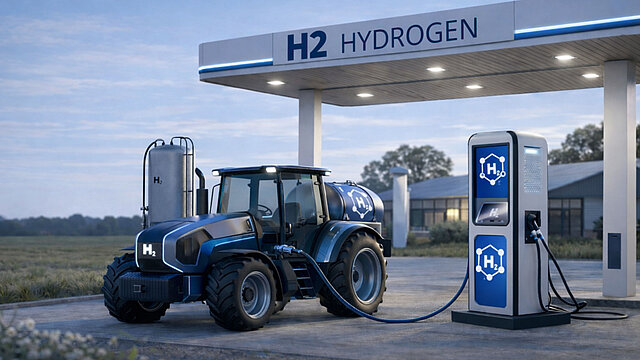
Each of these concepts presents its own technical and infrastructural challenges and is therefore not universally applicable. While the passenger car segment currently shows a clear development trend toward fully battery-electric powertrains, a variety of drivetrain concepts can be observed in the commercial vehicle sector, particularly for trucks and buses. Here, hydrogen combustion engines can represent a viable alternative, as parts of the existing infrastructure can continue to be utilized. In agricultural and off-highway applications, however, high energy demand and continuous power requirements meet limited charging or hydrogen infrastructure. As a result, major engine manufacturers are also advancing gas engine technologies.
IGEL has been involved in the development of hydrogen direct injection concepts as well as in engineering activities related to fuel cell systems. Drawing on our extensive experience in conventional internal combustion powertrains as well as electrified drivetrains, we understand the strengths and limitations of the various concepts and support our customers in identifying suitable solutions for their specific challenges.